
LARIZIA

The Curator of Modern Luxury

Popular Searches

Browse by Section

⌘K to open search anytime

LARIZIA

More

The Curator of Modern Luxury

The Complete Guide to Quiet Luxury
Definitive Guide Style

The Complete Guide to Quiet Luxury

Everything You Need to Know About the Movement Redefining Modern Elegance

Alexandra Hart Alexandra Hart
10 April 2026 · 25 min read · 8 chapters

From the philosophy behind stealth wealth to the definitive brand directory, investment strategies, and how to build a wardrobe that whispers rather than shouts — this is the only guide you will ever need.

01

What Is Quiet Luxury?

Quiet luxury is not a trend. It is a philosophy — a deliberate rejection of the conspicuous consumption that dominated fashion for the better part of three decades. Where the early 2000s celebrated the logo-emblazoned handbag and the instantly recognisable monogram, quiet luxury champions the opposite: garments and accessories whose value is encoded in their fabric, their construction, and their fit, rather than in any visible branding.

The term entered mainstream consciousness around 2023, propelled by the cultural phenomenon of Succession — a television series in which billionaires wore cashmere baseball caps and unbranded knitwear that cost more than most people's monthly rent. Suddenly, the world was asking a question that the truly wealthy had answered long ago: what do rich people actually wear?

The answer, it turned out, was not what most people expected. It was not Gucci or Louis Vuitton. It was The Row, Brunello Cucinelli, Loro Piana, Kiton — houses that had been quietly dressing the global elite for decades without ever courting the Instagram generation. These were brands that understood a fundamental truth about real luxury: if you have to tell people it is expensive, it probably is not expensive enough.

True luxury is not about being noticed. It is about being remembered.

At its philosophical core, quiet luxury represents a return to the founding principles of haute couture. Before fashion became a mass-market industry, clothing was made by artisans for individuals. Each garment was a collaboration between maker and wearer, designed to last not a season but a lifetime. The quiet luxury movement is, in many ways, a reclamation of that ethos — adapted for the modern world but rooted in the same reverence for craft, material, and permanence.

This is not minimalism, though the two are often confused. Minimalism is about reduction — fewer things, simpler forms. Quiet luxury is about elevation — the same number of things, perhaps, but each one chosen with extraordinary care and made with extraordinary skill. A quiet luxury wardrobe is not sparse; it is curated. Every piece earns its place not through novelty but through excellence.
02

The History and Origins

To understand quiet luxury, one must first understand the history it is reacting against. The democratisation of luxury fashion began in earnest in the 1990s, when houses like Gucci (under Tom Ford) and Louis Vuitton (under Marc Jacobs) recognised that the real money in fashion was not in couture but in accessories — handbags, belts, sunglasses — that could be produced at scale and sold to aspirational consumers who could not afford a £3,000 dress but could stretch to a £500 wallet.

This was the birth of the "accessible luxury" model, and it was extraordinarily successful. By the mid-2000s, the luxury goods market had exploded from a niche serving the genuinely wealthy to a global industry worth hundreds of billions. But this growth came at a cost: the word "luxury" itself was devalued. When every high street had a Louis Vuitton store and every influencer carried a Chanel bag, the signalling power of these brands diminished. The logo, once a marker of exclusivity, became a marker of conformity.

The backlash was inevitable. It began, as cultural shifts often do, at the very top of the economic pyramid. Ultra-high-net-worth individuals — the people who had always been the true luxury consumer — began gravitating toward brands that offered something the logo-heavy houses could not: genuine exclusivity. You could not walk into a Loro Piana store and buy a vicuña coat off the rack. You could not order a Kiton suit without a fitting. You could not get a Hermès Birkin without a relationship with the house. This was luxury as it had always been — personal, scarce, and earned.

The logo era did not end because logos became unfashionable. It ended because they became too common.

The cultural tipping point came in 2022-2023, when a confluence of factors — the Succession effect, a post-pandemic reassessment of values, growing awareness of fast fashion's environmental cost, and a generational shift toward "investment dressing" — brought quiet luxury from the preserve of the ultra-wealthy into the broader cultural conversation. Google searches for "quiet luxury" increased by over 600% in a single year. The Row's revenue reportedly doubled. Brunello Cucinelli's stock price reached all-time highs.

What had been an instinct among the wealthy became a movement among the aspirational. And unlike most fashion trends, it has shown remarkable staying power. Three years on, quiet luxury is not fading — it is deepening. The brands that embody it are growing faster than the market. The consumers who embrace it are becoming more discerning, not less. This is not a trend with an expiry date; it is a permanent recalibration of what luxury means.

03

The Definitive Brand Directory

Not every brand that claims the quiet luxury mantle deserves it. The term has been co-opted by fast fashion retailers and mid-market brands eager to ride the wave, but genuine quiet luxury is defined by a specific set of characteristics: exceptional materials, artisanal production, minimal branding, timeless design, and prices that reflect genuine quality rather than marketing spend. Here is our definitive directory of the brands that meet that standard.

The Titans

The Row — Founded in 2006 by Mary-Kate and Ashley Olsen, The Row has become the defining brand of the quiet luxury era. Named after London's Savile Row, the house is devoted to radical simplicity: oversized cashmere coats, fluid wide-leg trousers, and the iconic Margaux bag. Every piece is designed to be invisible in its perfection — no logos, no embellishments, just impeccable fabric and cut. Prices range from £500 for a t-shirt to £8,000+ for outerwear.

Brunello Cucinelli — The Italian "King of Cashmere" has built a £4 billion empire from his hamlet-factory in Solomeo, Umbria. Cucinelli's philosophy of "humanistic capitalism" — fair wages, investment in community, respect for craft — is as much a part of the brand as his legendary knitwear. A simple crewneck sweater costs upwards of £1,500, but the quality of the cashmere and the artisanal finishing justify every penny. His menswear is equally revered, making Cucinelli one of the few brands that serves both genders with equal authority.

Loro Piana — A textile dynasty dating to the early 19th century, Loro Piana is the undisputed master of rare fibres. They control the world's supply of vicuña — a material so precious it was once reserved for Incan royalty — and their cashmere is sourced from a single herd of goats in Mongolia. The Open Walk shoe (around £1,100) has become the unofficial uniform of the global elite. Acquired by LVMH in 2013 for €2 billion, Loro Piana has maintained its independence and its uncompromising standards.

The Establishment

Hermès — The original quiet luxury house, though its iconic bags have become so recognisable that some would argue it has transcended the category. Nevertheless, Hermès' commitment to craft — each Birkin takes 18-24 hours of hand-stitching by a single artisan — remains the gold standard. The house's ready-to-wear, scarves, and homeware are masterclasses in understated elegance.

Kiton — Neapolitan tailoring at its absolute peak. Kiton produces fewer than 22,000 suits per year, each one requiring 25 hours of hand-finishing. A Kiton suit starts at around £6,000 and can exceed £30,000 for bespoke. The brand is virtually unknown outside the world of serious menswear, which is precisely the point.

Zegna — The Italian house has repositioned itself as the men's quiet luxury brand under artistic director Alessandro Sartori. The Triple Stitch sneaker (£590) has become as recognisable in certain circles as any logo-heavy trainer, and the brand's tailoring remains among the finest in the world.

The New Guard

Khaite — Founded by Catherine Holstein in 2016, Khaite occupies the sweet spot between The Row's austere minimalism and something slightly more sensual. The Olivia hobo bag went viral, and the brand's cashmere bodysuits and sculpted knitwear have earned a devoted following. Prices are more accessible than The Row, typically ranging from £300 to £3,000.

Toteme — The Swedish brand founded by Elin Kling brings Scandinavian restraint to the quiet luxury conversation. Clean lines, neutral palettes, and the signature scarf coat have made Toteme a favourite among fashion editors. Prices range from £150 to £1,500, making it one of the more accessible entry points into the movement.

Max Mara — The Italian house has been making the definitive camel coat since 1981, and it remains one of the most enduring garments in fashion. Max Mara's quiet luxury credentials are built on decades of consistent excellence rather than sudden repositioning — the brand has always prioritised quality over noise.

04

Building a Quiet Luxury Wardrobe

The quiet luxury wardrobe is not built in a single shopping spree. It is assembled over time, piece by piece, with the patience and discernment of a collector. The goal is not to fill a wardrobe but to curate one — a collection of garments so well-chosen and well-made that each piece works with every other, and none will need replacing for years, if not decades.

The Foundation: Five Essential Pieces

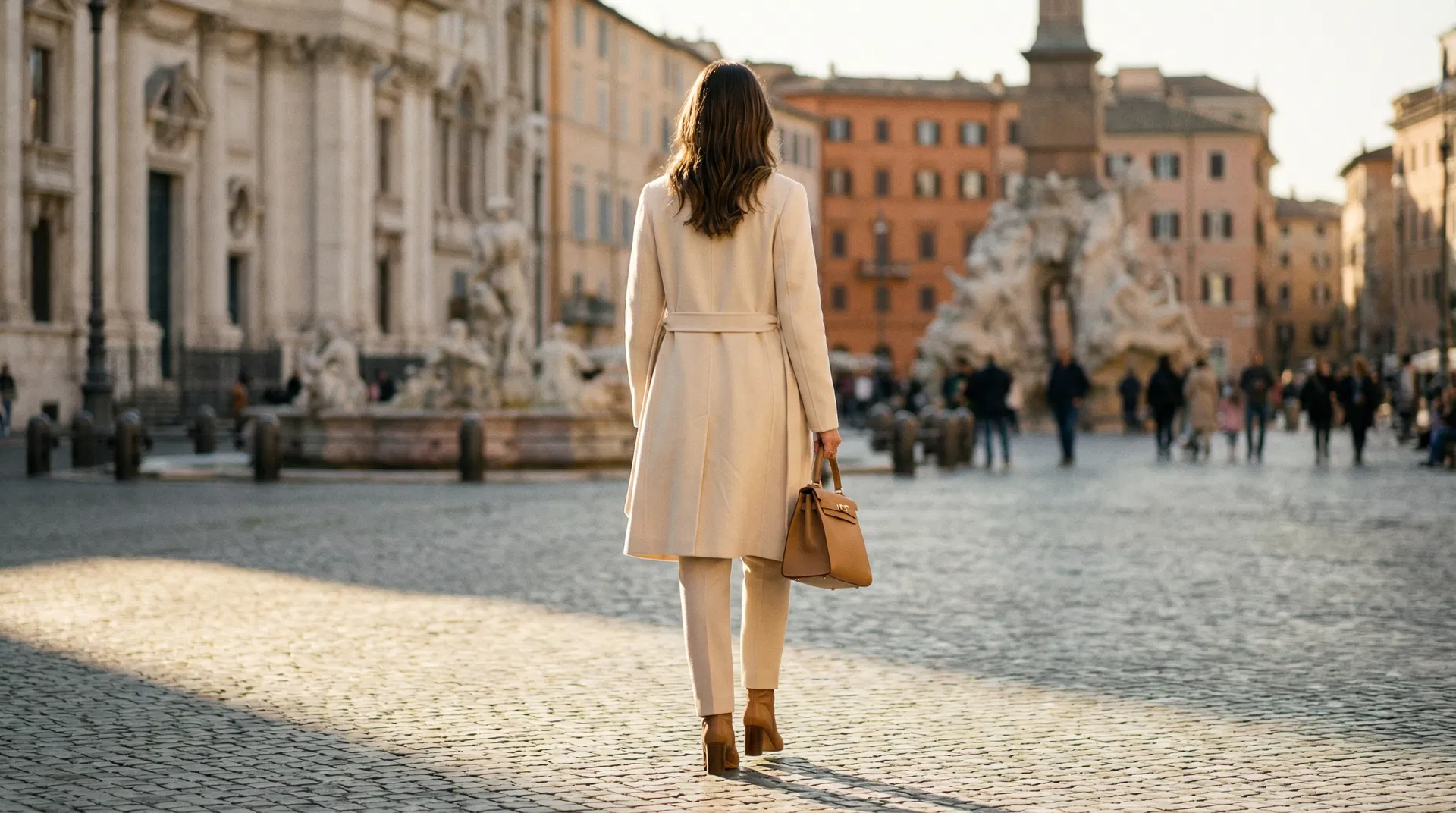
The Coat. Every quiet luxury wardrobe begins with a coat. For women, the Max Mara 101801 Icon Coat (£1,690) is the canonical choice — a double-breasted camel coat that has remained virtually unchanged since 1981 because it does not need to change. For men, a navy or charcoal overcoat from Kiton or Zegna serves the same purpose: a garment that elevates everything worn beneath it.

The Knit. Cashmere is the fabric of quiet luxury, and a perfectly made cashmere sweater is its most versatile expression. Brunello Cucinelli's crewneck (from £1,150) is the benchmark, but Loro Piana's baby cashmere options (from £1,800) are even finer. The key is weight and hand — a good cashmere knit should feel almost weightless yet impossibly warm.

The Trouser. For women, The Row's wide-leg trousers (from £890) offer a fluid, architectural silhouette that works with everything from a silk blouse to a simple t-shirt. For men, a pair of Zegna's wool flannel trousers (from £590) provides the same versatility — dressed up with a blazer or down with a cashmere polo.

The Bag. One bag, chosen with care, that will accompany you for years. For women, The Row Margaux (£4,290) or the Hermès Birkin (from £7,000, if you can secure one) are the definitive choices. For men, a Dunhill leather briefcase or weekend bag (from £1,800) serves the same purpose — a daily companion that improves with age.

The Shoe. Quiet luxury shoes are defined by their lack of obvious branding and their exceptional construction. For women, a pair of The Row's Bare sandals (£790) or Manolo Blahnik's BB pumps (£595). For men, Loro Piana's Open Walk (£1,100) or Edward Green's Chelsea boots (from £1,200) — shoes that announce nothing except impeccable taste.

The Principles

Cost per wear, not cost per item. A £1,500 cashmere sweater worn 200 times over five years costs £7.50 per wear. A £50 high-street knit that pills after ten washes costs £5 per wear — and looks terrible for most of them. Quiet luxury is not about spending more; it is about spending better.

Neutral does not mean boring. The quiet luxury palette — camel, navy, cream, charcoal, burgundy, forest green — is often dismissed as dull. But within this restrained spectrum lies extraordinary richness. The difference between a good navy and a great navy is the difference between a £50 jumper and a £1,500 one. Quiet luxury is about seeing colour with more sophisticated eyes.

Fit is everything. No amount of expensive fabric can compensate for poor fit. The quiet luxury consumer understands that tailoring is not an optional extra but a fundamental requirement. Budget for alterations on every purchase. A £500 jacket that fits perfectly will always look more expensive than a £5,000 jacket that does not.

A quiet luxury wardrobe is not about having more. It is about needing less — because everything you have is exactly right.
05

Quiet Luxury for Him

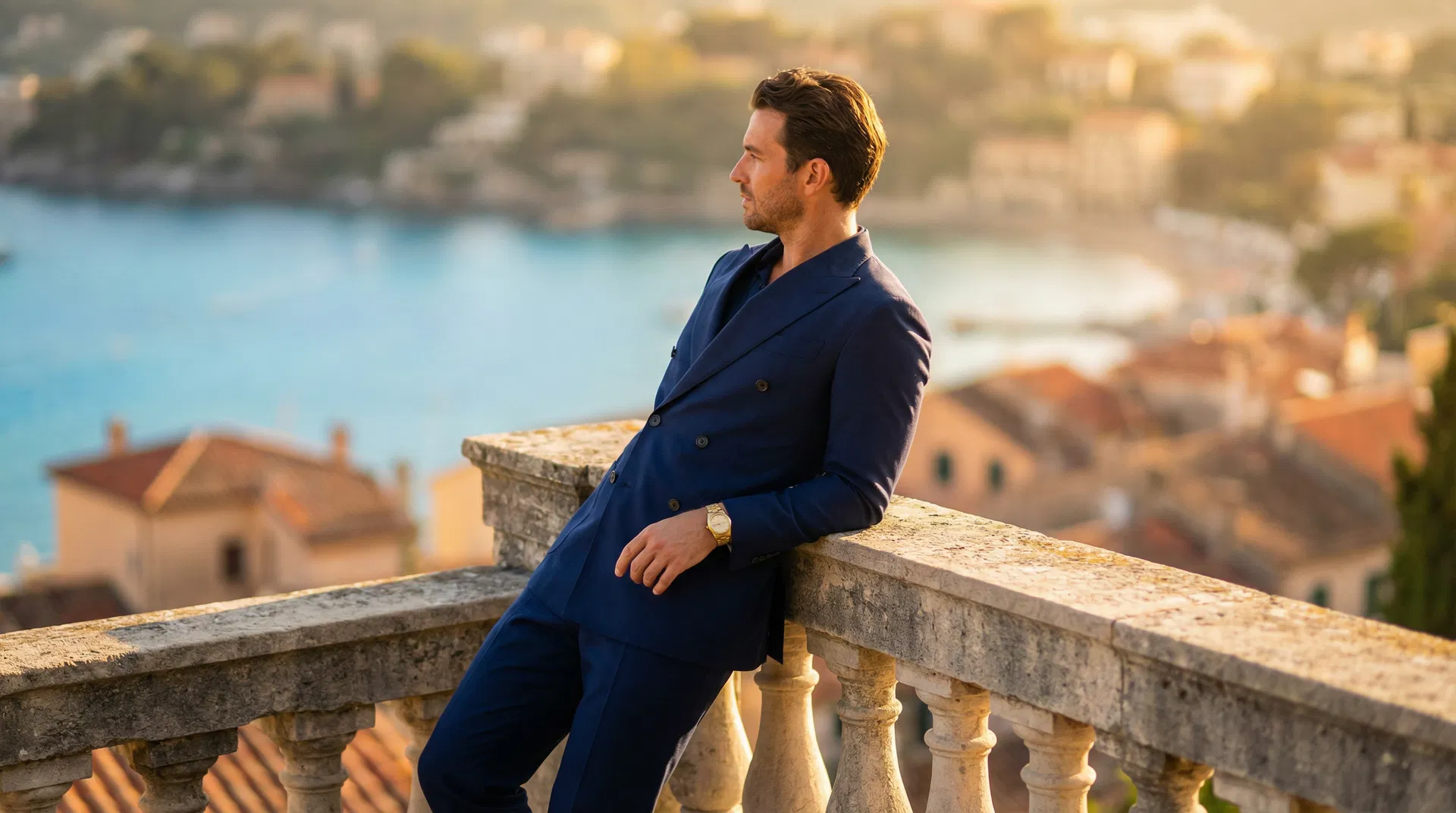
Men's quiet luxury operates on slightly different principles than women's, though the underlying philosophy is identical. Where women's quiet luxury tends to emphasise fluid silhouettes and tactile fabrics, men's quiet luxury is rooted in the traditions of tailoring — specifically, the Savile Row and Neapolitan schools that have been dressing gentlemen for centuries.

The men's quiet luxury wardrobe is built on three pillars: tailoring, knitwear, and footwear. A well-cut suit from Kiton, Brioni, or a Savile Row house like Anderson & Sheppard is the foundation. Layered over this are cashmere sweaters and polo shirts from Cucinelli or Loro Piana. And anchoring it all are shoes from Edward Green, John Lobb, or Loro Piana — makers who understand that a man's shoes are the first thing a discerning observer notices.

The men's watch is perhaps the most significant quiet luxury signifier. While the flashy gold Rolex Submariner has its place, the true quiet luxury timepiece is something more restrained: a Patek Philippe Calatrava, a Jaeger-LeCoultre Reverso, or an A. Lange & Söhne Saxonia. These are watches that most people will not recognise — and that is precisely the point. They are made for the wearer, not the audience.

Grooming, too, plays a role. The quiet luxury man does not use mass-market products. He has a barber, not a hairdresser. His skincare is from Aesop or Augustinus Bader, chosen for efficacy rather than packaging. His fragrance is niche — perhaps Creed's Aventus, Le Labo's Santal 33, or something from Frederic Malle — applied sparingly, discovered only in close proximity.

The men's market for quiet luxury is growing faster than women's, at 5.1% CAGR compared to 4.2%. This is driven partly by a generational shift: younger men are more interested in fashion and grooming than their fathers were, but they are also more discerning. They have grown up with fast fashion and seen its limitations. They want quality, and they are willing to pay for it — but they want it without the performance of conspicuous consumption.

06

Investment and Resale Value

One of the most compelling arguments for quiet luxury is financial. While fast fashion depreciates to zero the moment it leaves the store, many quiet luxury pieces retain — and in some cases increase — their value over time. This is not merely anecdotal; the data is striking.

Hermès Birkin bags have appreciated at an average rate of 14.2% per year over the past two decades, outperforming the S&P 500, gold, and real estate. A Birkin 25 in Togo leather purchased in 2010 for approximately £5,000 now sells on the secondary market for £12,000-£15,000. Certain limited editions and exotic leathers have appreciated even more dramatically.

The Row's Margaux bag, while newer to the market, has shown similar resilience. Secondary market prices consistently match or exceed retail, suggesting genuine demand rather than speculative inflation. Brunello Cucinelli's cashmere pieces hold approximately 40-60% of their retail value on the resale market — extraordinary for clothing, which typically retains less than 20%.

In menswear, the picture is equally compelling. Vintage Kiton suits regularly sell for 50-70% of their original retail price, even after years of wear. Patek Philippe watches are famously described as pieces "you never actually own — you merely look after for the next generation," and their resale values reflect this philosophy, with many models appreciating significantly.

The lesson is clear: quiet luxury is not just an aesthetic choice. It is a financial strategy. By investing in fewer, better pieces that hold their value, the quiet luxury consumer actually spends less over time than the fast fashion consumer who replaces their wardrobe every season. The most expensive garment is always the one you throw away.

A Birkin bag has outperformed the S&P 500 for twenty consecutive years. The most luxurious investment is the one you can wear.
07

Sustainability and Ethics

Quiet luxury and sustainability are natural allies, though the relationship is more nuanced than it might first appear. The fundamental proposition of quiet luxury — buy less, buy better, keep longer — is inherently more sustainable than the fast fashion model of constant consumption and disposal. A cashmere sweater worn for a decade has a fraction of the environmental impact of ten cheap acrylic knits worn for a season each.

Many quiet luxury brands have also taken concrete steps toward environmental responsibility. Brunello Cucinelli has invested heavily in sustainable cashmere sourcing, working directly with Mongolian herders to ensure animal welfare and prevent overgrazing. Loro Piana's vicuña programme in Peru has helped bring the species back from near-extinction while providing income to indigenous communities. The Row uses deadstock fabrics where possible and has committed to reducing its carbon footprint across its supply chain.

However, it would be disingenuous to suggest that quiet luxury is inherently sustainable. Cashmere production, even at its most responsible, has significant environmental costs. The fashion industry's carbon footprint is enormous regardless of price point. And the "buy less, buy better" philosophy only works if consumers actually buy less — rather than simply adding expensive pieces to an already overflowing wardrobe.

The most honest assessment is this: quiet luxury is more sustainable than its alternatives, but it is not sustainable in absolute terms. The brands that deserve respect are those that acknowledge this complexity and work to address it, rather than those that use "quiet luxury" as a greenwashing label for business as usual.

For the consumer, the most sustainable approach is also the most aligned with quiet luxury principles: buy only what you need, choose the best quality you can afford, care for it properly, and when you are done with it, sell it or pass it on rather than discarding it. The circular economy is not just an environmental imperative; it is the natural lifecycle of a truly luxurious garment.

08

Where to Shop

The quiet luxury shopping experience is, fittingly, a quieter affair than the typical luxury retail environment. These are not brands that compete for attention on Oxford Street or Fifth Avenue. Many of the best quiet luxury shopping experiences happen in discreet, appointment-only settings — or online, through carefully curated platforms.

In Person

London: Mount Street in Mayfair has become the unofficial high street of quiet luxury, home to The Row, Brunello Cucinelli, and a constellation of independent boutiques. Savile Row remains the global capital of bespoke tailoring. Dover Street Market offers a curated edit of quiet luxury alongside more avant-garde designers.

Milan: Via della Spiga and Via Montenapoleone house the Italian titans — Cucinelli, Loro Piana, Zegna, Kiton. The Fondazione Prada complex is worth visiting for its architecture alone, but the adjacent store offers one of the most beautiful retail experiences in the world.

Paris: Le Bon Marché on the Left Bank is the quiet luxury department store — more curated and less overwhelming than Galeries Lafayette. The Hermès flagship on Rue du Faubourg Saint-Honoré is a pilgrimage site.

New York: The Row's flagship on the Upper East Side is a masterclass in retail design — a converted townhouse that feels more like visiting a very stylish friend's home than shopping. Bergdorf Goodman's upper floors remain the best-curated luxury department store in America.

Online

Net-a-Porter / Mr Porter: The most comprehensive online selection of quiet luxury brands, with excellent editorial content and styling advice. Their "Extremely" edit specifically curates the highest-end pieces.

Matches Fashion: Strong on emerging quiet luxury brands and offers a more editorial, discovery-oriented shopping experience than Net-a-Porter.

The RealReal / Vestiaire Collective: The best platforms for pre-owned quiet luxury. Given that these pieces hold their value so well, the secondary market offers genuine opportunities to acquire investment pieces at a discount.

Brand Direct: Many quiet luxury brands now offer excellent online shopping experiences through their own websites. The Row, Cucinelli, and Loro Piana all have e-commerce platforms that reflect the care and attention of their physical stores.

Further Reading